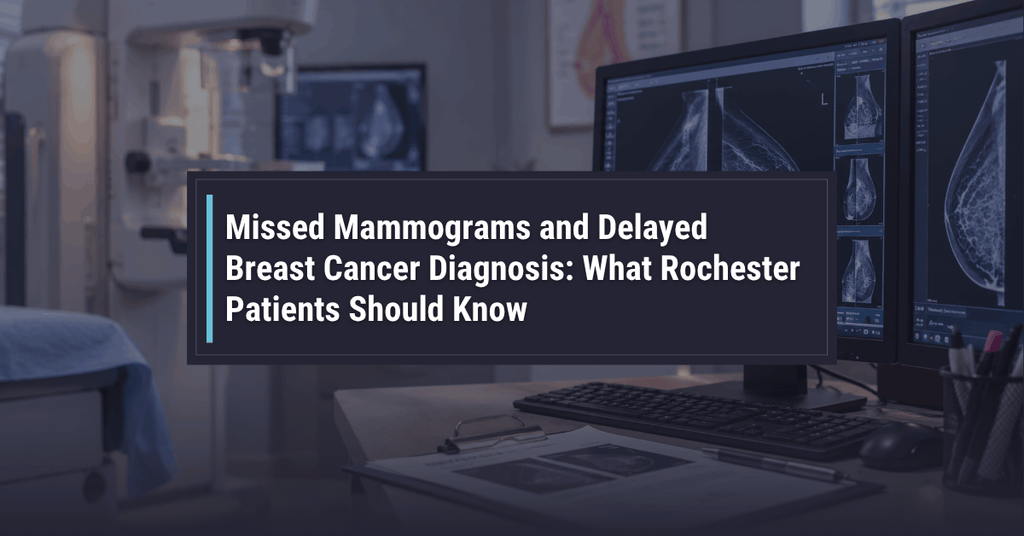
The only thing worse than receiving a breast cancer diagnosis is receiving a late one. Knowing that your medical provider could have possibly diagnosed your condition sooner but made some type of mistake that delayed your diagnosis can be a difficult concept to grapple with. A leading cause of a delayed diagnosis of breast cancer is a missed mammogram.
Unfortunately, this is an all-too-familiar occurrence, and the medical malpractice lawyers at Powers & Santola, LLP know it well. With over 50 years of experience, hundreds of millions of dollars recovered for our clients in verdicts and settlements, and repeated recognition as Medical Malpractice Lawyer of the Year and Personal Injury Lawyer of the Year, you can trust us to get to the bottom of your case. If you or your loved one’s healthcare provider caused a missed mammogram that resulted in a delayed breast cancer diagnosis, call us today for immediate legal assistance.
The Importance of a Mammogram
According to Susan G. Komen, mammograms are the most effective tool to detect breast cancer early. They are so effective that they can catch breast cancer before there are any warning signs, and sometimes years before a patient or healthcare provider can feel a lump. This early detection improves survival rates and allows less aggressive treatment.
In the United States, most early-stage breast cancers are detected with screening mammography. Susan G. Komen says that studies show that women aged 50 to 59 who get a mammogram have a 14% lower risk of dying from breast cancer compared to those who didn’t. Women ages 60 to 69 who get a mammogram have a 33% lower risk of dying from breast cancer than those who didn’t.
How Mammograms Work
The mammogram process begins when a technologist places the patient’s breast onto a flat platform on the mammogram machine. The technician then places a clear plastic compression plate over the breast to spread the tissue and create clearer images.
The mammogram machine emits a brief, low-dose burst of X-rays that pass through the compressed breast tissue. This creates a shadow image of the internal structures. The machine takes pictures from multiple angles to get a complete picture.
What Mammograms Detect
Mammograms are used for screening and diagnostic purposes. Screening mammograms are X-rays of the breast performed on women who have no signs or symptoms of cancer. They help identify malignant masses before they become clinically detectable. Clinicians perform these tests at regular intervals.
Diagnostic mammography is an X-ray of the breast performed on women who lump, an abnormality detected on a previous mammogram, or other suspicious symptoms.
When conducting these tests, radiologists look for signs that may indicate cancer, such as:
- Microcalcifications, which are specks that can signal early changes in cells.
- Masses or lumps, which are solid growths or cysts in the fat and glandular tissue
- Increasing density not indicated on previous mammograms
- Architectural distortion, which includes any unusual patterns or pulling in the breast tissue
- Asymmetries between the breasts, which suggest malignancy
- A mass with irregular or spiked borders
What Are the Benefits of Getting Regular Mammograms
Some of the leading benefits of getting screening mammograms include:
- Early detection: Mammograms can identify small tumors, cysts, and microcalcifications well before they are noticeable through physical exams.
- Higher survival rates: As explained above, patients are more likely to survive cancer when it is detected early.
- Less aggressive treatment options: If a patient has cancer, they may be able to require less invasive treatments than those who receive an advanced-stage cancer diagnosis.
- Catching silent cases of breast cancer: Many people diagnosed with breast cancer have no known risk factors or family history, so mammograms serve as a critical detection tool.
Another key benefit of regular mammograms is that these tests can help track changes over time. Radiologists can use routine screenings to compare current images with past scans. This can help them identify subtle shifts in breast tissue that may be cancerous.
Some medical facilities use digital mammography, which uses computer-assisted detection software to help radiologists more accurately identify potential problem areas.
Who Should Get a Mammogram?
Current recommendations suggest women age 40 and older get mammograms each year, per the Cleveland Clinic. However, the United States Preventive Services Task Force recommends screening every two years, starting at age 40. The American Cancer Society (ACS) does not recommend mammograms for everyone at age 40; instead, it bases its recommendations on the patient’s specific risk level.
Women aged 40 to 44 with an average breast cancer risk have the option of starting to screen with a mammogram each year. At the same time, the ACS recommends that women aged 45 to 54 get an annual mammogram, and women aged 55 and older can get a mammogram every year or every other year. Screening should continue as long as the patient is in good health and has a life expectancy of more than 10 more years.
Average risk is defined as not having any of the following:
- A personal history of breast cancer
- A strong family history of breast cancer
- A genetic mutation known to increase the risk of breast cancer
- A history of chest radiation therapy before the age of 30
The ACS does not recommend clinical breast exams, which are physical exams performed by a healthcare professional, for average-risk women of any age.
The ACS recommends that women with a high risk of breast cancer begin getting mammograms every year, starting at age 30. High-risk includes women who meet any of the following criteria:
- Have a lifetime risk of breast cancer 20 to 25% or greater
- Have a known BRCA1 or BRCA2 gene change, based on genetic testing
- Have a first-degree relative with a BRCA1 or BRCA2 gene change and have not personally had genetic testing
- Had chest radiation therapy before they were 30 years old
- Have certain medical conditions, such as Cowden syndrome, Bannayan-Riley-Ruvalcaba syndrome, or Li-Fraumeni syndrome
What Is a Missed Mammogram?
A missed mammogram occurs when a patient does not receive a mammogram as scheduled, based on their age and/or risk level. It can also refer to a false-negative result when a mammogram image appears normal even though breast cancer is present.
How Does Missing a Mammogram Delay Cancer Diagnosis?
Mammograms can help detect breast cancer earlier. However, if you don’t get a mammogram when you should, or if the mammogram is misinterpreted, you could go about your normal life without knowing. You wouldn’t know that you have breast cancer until you start developing symptoms or your next mammogram detects it, which could be years later. During these two points in time, the cancer could be growing unfettered, leading to a delayed cancer diagnosis.
Common Causes of Delayed Breast Cancer Diagnosis
One study examined 7,129 women with breast cancer and found that 1,601 experienced a delay in breast cancer diagnosis. The missed diagnoses were largely attributed to screen-detected cancers missed at the previous screen. Missed interval cancers that appeared between tests also contributed significantly to delayed diagnoses. Many women also experienced a misdiagnosis after recall.
Researchers in the study provided many reasons for the missed or delayed diagnoses of breast cancer, including:
- The presence of extremely dense breast tissue that masks the breast malignancy during the mammogram or causes detection errors
- Interpretation errors by the screening radiologist
- Incorrect Breast Imaging Reporting and Data System (BI-RADS) score classification during the clinical diagnostic workup
- Misinterpretation of abnormalities by the clinical radiologist
- Diagnostic errors in biopsy procedures
- Failure to use other testing tools that may have detected the cancer, such as breast tomosynthesis, contrast-enhanced mammography, or contrast-enhanced breast MRI
- Lack of communication with other specialists
Other common issues that can lead to a delayed diagnosis of breast cancer include the following:
- Disregarding a persistent and palpable breast lump
- Disregarding other abnormal changes in breasts, such as:
- Dimpling of the skin
- A change in the size or shape of a breast
- Discoloration of the breast
- Inward turning of the nipple
- Failing to report symptoms to other healthcare providers
- Failing to recognize significant changes when comparing previous mammograms
- The presence of dense breast tissue, which appears white on a mammogram and can hide tumors
- Misinterpretation by the pathologist of breast cells or tissue specimens after a needle or surgical biopsy
- Inaccurate sampling of breast cells or tissue by the physician performing the biopsy
- The mixing up or mislabeling of pathology specimens between patients
- Failing to order additional imaging or other tests when they are warranted
- Failing to refer a patient to a specialist
- Failing to schedule follow-up tests
- Doctors’ failure to review reports
The Dangers of a Delayed Breast Cancer Diagnosis
Missed mammograms can significantly increase the likelihood of breast cancer progressing into a later stage. This reality causes lower survival rates. Breast cancer is a treatable form of cancer, but the best survival rates apply when breast cancer is diagnosed at earlier stages. The American Cancer Society provides the following five-year survival rates for breast cancer, depending on the stage:
- Localized: Greater than 99%
- Regional: 87%
- Distant: 32%
To survive, the patient may require more aggressive forms of treatment, such as:
- Lumpectomies
- Mastectomies
- Chemotherapy
- Radiation
How to Prevent Missed Mammograms and Diagnostic Errors
Understanding the serious nature of a delayed breast cancer diagnosis is the first step to preventing it. Some proactive steps that you can take in your medical care include the following:
- Keep a schedule: Write down your mammogram appointments on a calendar you can track and check so you don’t accidentally skip a year when you plan to get a mammogram.
- Review your test results: Review your mammogram results and the written radiology report. Ask any questions that you have.
- Understand breast density: Read the notice about dense breast tissue and make sure you understand its effect. Ask your medical provider if you don’t understand or have concerns.
- Ask for supplemental screening: You can ask your provider for a breast ultrasound, molecular breast imaging, or MRI. These options are particularly helpful for women with dense breast tissue.
- Follow up with your healthcare provider: If you notice concerns in your report or symptoms after your mammogram, ask your healthcare provider for a thorough workup.
What Can I Do If My Healthcare Provider Caused a Missed Mammogram?
When medical providers deviate from the standard of care and injure a patient as a result, injured patients (or their families in the event of wrongful death) can pursue a medical malpractice claim. They can also report the misconduct to the licensing board in hopes that the claim will prevent similar misconduct in the future.
By filing a medical malpractice claim, you can seek compensation from the healthcare provider, facility, or medical malpractice insurance to recover compensation for the damages you suffered, such as:
- Additional medical expenses for surgeries, hospital stays, diagnostic tests, and follow-up treatment
- Lost wages for lost income due to being unable to work while seeking medical treatment or recovering
- Reduced earning capacity if your long-term earning capacity is affected by your cancer
- Physical pain and suffering
- Emotional distress and mental anguish
An experienced attorney from our law firm can help identify all the damages you are entitled to and fight for the maximum compensation available for your claim.
Contact the Legal Team at Powers & Santola, LLP
If your healthcare provider caused a missed mammogram that resulted in a delayed breast cancer diagnosis, the empathetic and knowledgeable legal team at Powers & Santola, LLP can guide you through the legal process while you focus on your recovery. Contact us today for a free consultation.