In the Rochester, New York region, there are two dominant health systems. The first is the University of Rochester Medical Center, which operates Strong Memorial Hospital and Golisano Children’s Hospital. URMC also has the following affiliated hospitals:
- Highland Hospital
- Thompson Health
- Noyes Health
- Jones Memorial Hospital
- St. James Hospital
- Geneva General Hospital
- Soldiers & Sailors Memorial Hospital
- Finger Lakes Health
The second is Rochester Regional Health, and its affiliate hospitals:
- Rochester General Hospital
- Unity Hospital
- United Memorial Medical Center
- Clifton Springs Hospital & Clinic
- Newark-Wayne Community Hospital
- Gouverneur Hospital
- Massena Hospital
- Canton-Potsdam Hospital
These hospitals, specialty clinics, and other local medical offices may diagnose patients with cancer. When these facilities and their practitioners fail to diagnose patients accurately and quickly with serious medical conditions like cancer, those harmed can pursue a legal claim against them. An experienced attorney from Powers & Santola, LLP can discuss your legal rights and options during a free case review.
Focus on local concerns by addressing how patients in Rochester, NY, can evaluate whether they have a viable medical malpractice case. Highlight local legal standards, access to local courts, and how local attorneys can help investigate and build a case.
Why You Need a Local Attorney for Help with a Failure to Diagnose Cancer Case
Local attorneys understand the legal framework specific to their jurisdictions. They know how to serve and provide legal notice to governmental entities and corporations. They are also familiar with local judges, other attorneys, and insurance adjusters, giving them an advantage over attorneys who may be unfamiliar with them.
Local attorneys are also familiar with the requirements of New York law regarding these cases, including the statute of limitations and exceptions related to delayed cancer diagnosis cases. Attorneys who don’t work in this jurisdiction may not be aware of these exceptions and may erroneously conclude that you might not have a viable medical malpractice claim if the harm occurred more than two and a half years ago.
Why You Should Choose Powers & Santola, LLP for Your Medical Malpractice Claim
You can choose any personal injury attorney you want, but we believe Powers & Santola, LLP is the right choice for you because:
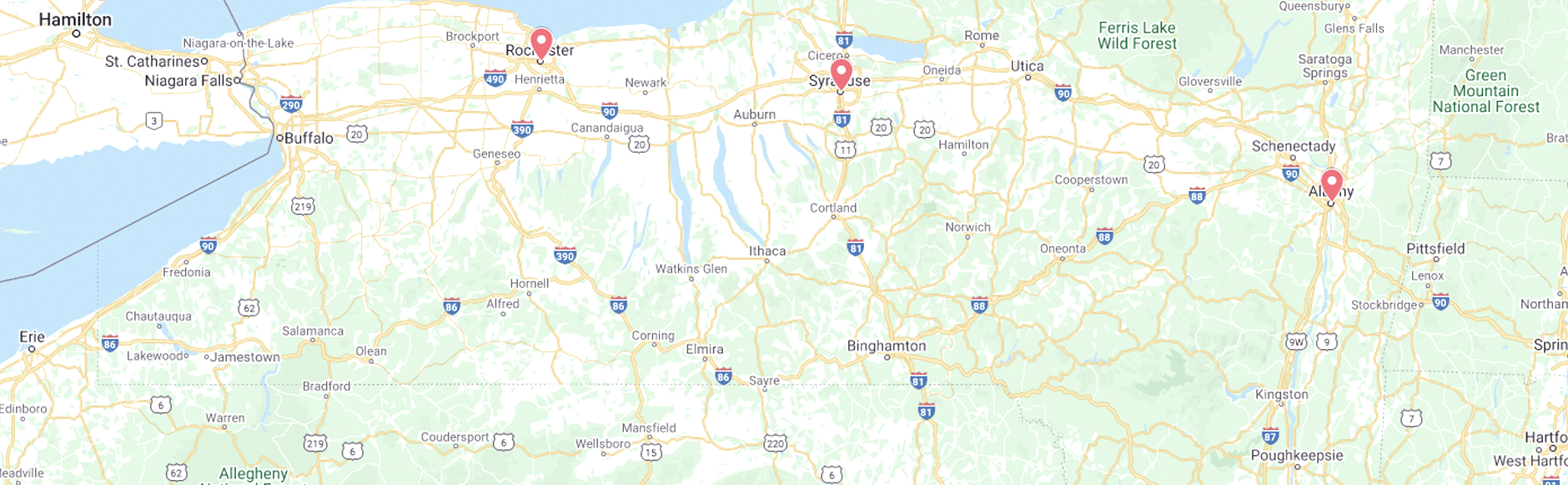
- We are local. We have offices in Rochester, Albany, and Syracuse, providing valuable legal services to residents of Upstate New York.
- We are experienced. Our dedicated attorneys have decades of experience working in this area of the law. We have handled cases like yours.
- We have achieved significant results. Our personal injury and medical malpractice firm has recovered hundreds of millions of dollars in compensation for our deserving clients.
- We are highly regarded. U.S. News & World Report and Best Lawyers have repeatedly recognized our law firm as one of the Best Law Firms in the nation. Our individual attorneys have also been named Personal Injury Lawyer of the Year and Medical Malpractice Lawyer of the Year multiple times.
- We have local connections. We can connect you with the best doctors to ensure you receive an accurate diagnosis. We can also call upon our network of experts to help support your case.
- We care. We live and work in this area. We want to hold all medical providers to the highest standard of care and fight zealously for our clients to ensure they receive fair treatment.
We can discuss your situation and how we can help you further during a free case review. Call us today to get started.
Legal Analysis: What You Need to Prove in a Rochester Delayed Diagnosis Cancer Case
You might have a viable medical malpractice case if a healthcare provider’s negligence caused your delayed cancer diagnosis in Rochester. You must prove that your medical provider breached their duty of care, that the breach caused your delayed diagnosis, and you suffered harm as a result.
Here is more information about what you must establish in a failure-to-diagnose or delayed cancer diagnosis case.
Doctor/Patient Relationship
The first legal element you must establish is that you had an official doctor-patient relationship with the defendant. This establishes that they owed you a duty to provide care that meets the accepted standard of care in your case.
The Medical Standard of Care
The medical standard of care is the level of treatment another doctor in the same geographic area and specialty area would have provided under similar circumstances. Not every delay in cancer diagnosis gives rise to a legal claim against the provider. However, if a reasonably competent doctor of similar experience would have provided different care under similar circumstances, you may have a viable legal claim.
Establishing this medical standard of care can be challenging and requires having a medical expert. The expert draws upon their education, experience, and research to evaluate the situation and the doctor’s actions. Ultimately, they explain what another doctor would have done under the circumstances and compare that to what the defendant medical provider did.
Deviation from the Standard of Care
The crux of many cancer delayed diagnosis cases is what the medical professional being sued did wrong. The doctor may have done something wrong or failed to do something. Doctors can miss cancer diagnoses for many reasons, including the following:
- Failing to take a detailed family history
- Failing to complete a thorough physical exam
- Ignoring, minimizing, or misinterpreting patient symptoms
- Attributing symptoms to other medical conditions
- Failing to screen for cancer despite a family history of cancer or symptoms suggesting it
- Failing to order appropriate tests, including blood work, imaging scans, or biopsies
- Failing to refer a patient to an oncologist or other specialist
- Having communication breakdowns with other healthcare providers, the lab, or hospital staff
- Misreading or misinterpreting test results, such as an MRI, mammogram, PAP smear, CT scan, X-ray, or biopsy results
- Failing to follow up
- Not recognizing possible signs of cancer due to its rarity or the doctor’s inexperience with it
Causation
The next question is whether the doctor’s deviation from the standard of care is what actually caused the delayed diagnosis. For a judge or jury to make this finding, they must determine that the medical provider’s breach directly led to the delay in your diagnosis, causing it to progress or worsen.
A medical expert may help to make the connection between the doctor’s actions and the delay. Many failure to diagnose cancer cases rely on statistics regarding survival rates and medical opinions. Medical records and written communication can also help establish that the doctor’s actions or inactions made a significant difference in your health.
Damages
To win a medical malpractice case, you must be able to show you were harmed in some way. In a failure to diagnose case, this usually requires one of the following:
- The delay significantly worsened your condition.
- The cancer spread.
- The delay limited your treatment options.
- The delay decreased your chance of survival.
No legal claim can help prevent the mistake from occurring in the first place or reasonably make up for any time you lost because of the delay. Courts are limited in these cases to awarding money damages against the defendant to offset the costs of the delay, such as:
- Medical bills
- Ongoing medical treatment
- Future medical expenses
- Lost wages
- Reduced earning capacity
- Pain and suffering
- Mental anguish
- Reduced quality of life
A battle with cancer is difficult enough without having to worry about your finances. An experienced attorney from our law firm can review your situation and determine if you have a viable legal claim.
Signs You May Have a Viable Delayed Diagnosis Case
While not every delayed diagnosis of cancer provides legal grounds for a medical malpractice case, some do. Signs that you may have a viable delayed diagnosis case include:
- The cancer progressed from an early, highly treatable stage (Stage 1 or localized) to an advanced, harder-to-treat stage (Stage IV or distant).
- You required more aggressive medical treatments, such as chemotherapy rather than surgery alone, due to the delay in treatment.
- Your survival rate has dropped significantly.
- There is clear evidence regarding how the doctor caused the delay in diagnosis.
The best way to find out if you have a viable medical malpractice claim is to speak to an experienced medical malpractice attorney about your specific case. Powers & Santola, LLP offers free consultations, so you can learn about your legal rights and options at no cost or obligation to you.
An Important Note on New York’s Statute of Limitations for Failed Cancer Diagnosis Cases
You may have heard that the statute of limitations in New York to file most medical malpractice lawsuits is two and a half years. However, did you know that there is a special exception for cases involving delayed diagnoses of cancer?
This special law, unique to New York, is known as Lavern’s Law. Under this law, you have two and a half years from the date you discovered the negligence or reasonably should have known about it, rather than the date the negligence occurred, as applies in most medical malpractice cases. However, there is still an upward limit of seven years for these cases, so you must still act promptly once you discover the mistake to protect your legal rights.
How an Experienced Medical Malpractice Lawyer Can Help Prove Your Case
An experienced lawyer can identify, gather, and preserve valuable evidence to help prove your claim, such as:
- Medical expert testimony: Medical experts can testify about how another medical provider would have been able to spot the symptoms of cancer earlier and how an earlier diagnosis could have benefited you.
- Changes in treatment plans: Our attorneys can work to secure documentation that demonstrates that the delayed diagnosis resulted in you requiring more aggressive or painful treatments.
- Survival rate statistics: Medical research may help indicate the difference in survival rates between now and when the condition should have been diagnosed.
- Medical records: Your medical records may help pinpoint factors that contributed to your delayed diagnosis.
- Your situation: We may ask you, your spouse, loved ones, and your coworkers to discuss how the delayed cancer diagnosis has affected you, your life, and your relationships with them.
Next Steps to Take If You Suspect You Have Suffered from a Delayed Cancer Diagnosis
If you suspect that a delayed cancer diagnosis has harmed you, you can’t afford to take legal action. You must immediately begin building your claim to protect your legal rights. Here are a few steps you can take to protect your legal rights, including:
Seek a Second Opinion
Visit a new healthcare provider to confirm your suspicions. Explain your symptoms and that you think the original doctor misdiagnosed you.
Gather Your Medical Records
Collect all of your medical records related to your condition, including doctor’s notes, reports of your symptoms, and test results. These records can be powerful evidence in your case.
Keep Records Related to Your Case
You may begin to accumulate various records related to your case, such as:
- Medical records
- Bills
- Check stubs showing lost income
- Receipts
- Invoices
- Communications from insurance providers
- Settlement offers
- Journal entries regarding your daily pain and symptoms
- Calendars with medical appointments
Keep this information in an organized folder and give it to your lawyer.
Contact an Experienced Lawyer
Discuss your case with an experienced lawyer. Explain your medical history and the events leading to your diagnosis. The lawyer can help you understand the complex legal process involved in bringing a delayed diagnosis claim. They can also help you understand if you have a valid claim against your doctor and advise you on the next steps to take in your case.
Contact Our Attorneys for a Free Case Consultation
Learning you have cancer may have come as a shock, especially if you find out that it’s at a later stage due to your doctor’s mistakes. You shouldn’t have to pay the consequences of someone else’s negligence. The legal team at Powers & Santola, LLP is here to help prevent that from occurring.
Contact us today to schedule a free, no-obligation consultation.
Related:
- Cancer Misdiagnosis Settlements: What Compensation Could You Receive
- Common Cancers Doctors Fail to Diagnose Early
- What to Do If Your Doctor Missed Your Cancer Diagnosis
- Albany Medical Malpractice: Breast Cancer Diagnostic Errors Beyond Mammography Failures
- Albany Cancer Wrongful Death Lawyer
- Rochester Colorectal Cancer Screening Failures: Colonoscopy Delays and Missed Warning Signs
- Syracuse Lymphoma Misdiagnosis: When Swollen Lymph Nodes Are Dismissed as Minor Infections
- Rochester Ovarian Cancer Failure to Diagnose Lawyers